Growth stimulant for seeds VIMPEL 2 – for seed an plant treatment
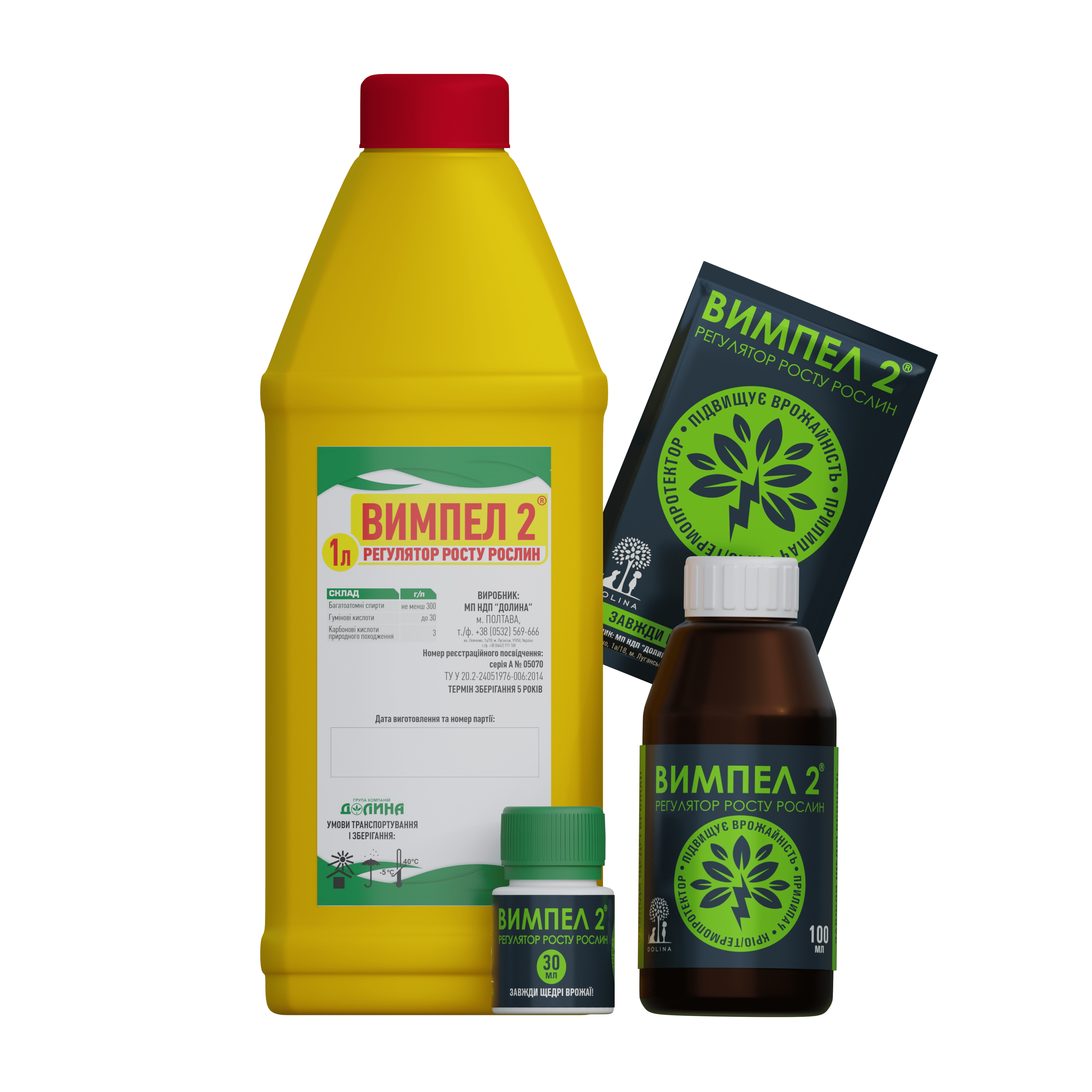
Plant growth regulator for seeds VIMPEL 2® is a complex natural and synthetic formulation with systemic and contact properties for treatment of seeds and plants in the vegetative stage.
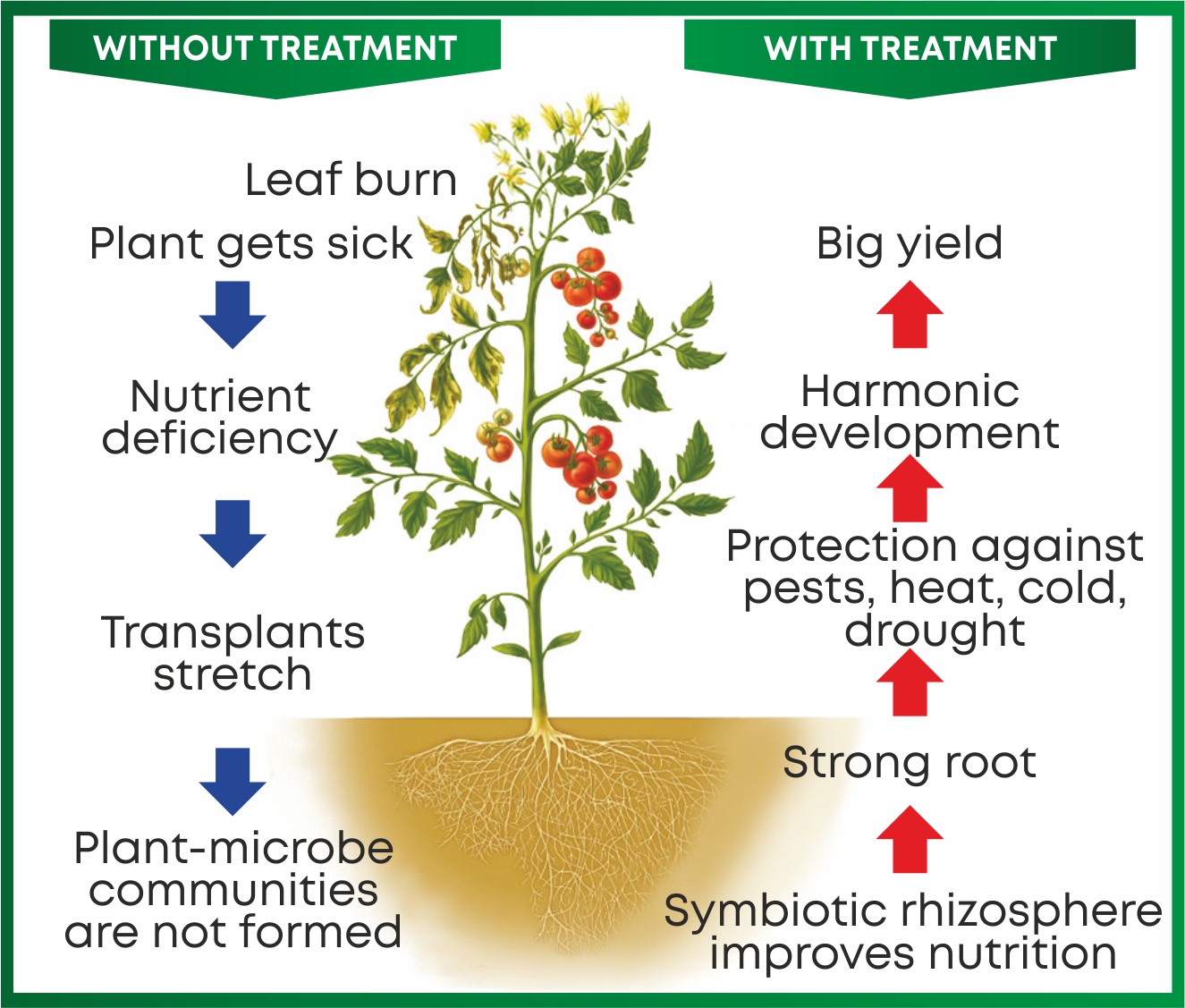
| GROWTH STIMULANT | improves and stimulates growth and development of plants |
| ADAPTOGEN | increases adaptive features of plants to environment |
| CRYOPROTECTANT | increases resistance to low temperature and frosts of short duration |
| THERMOPROTECTANT | increases resistance to high temperature |
| ADJUVANT, FILMING AGENT | enhances efficacy of pesticides and fertilizers |
| DISEASE INHIBITOR | plants are less subjected to diseases |
| SOIL ACTIVATOR | enhances development and activity of soili microorganisms |
| ANTI-STRESS AGENT | plants are faster released from stress due to: transplants, treatment with plant protection products and etc. |
VIMPEL 2® IS NON-TOXIC, ENVIRONMENTALLY FRIENDLY.
Seed stimulant: effects on plants
Steeping of seeds and planting material:
Recommended application rate: 20 – 30 mL per 1 liter of water.
- stimulates the process of germination and seed vigor;
- increases germination;
- promotes active growth of roots and intense acquirement of the vegetative mass;
- protects seeds up to 2 months if they encounter unfavorable conditions in the soil.

Foliar treatment (before and after flowering):
Recommended application rate: 10 – 20 mL per 10 liters of water.
- increases drought and frost resistance;
- promotes absorption of all types of fertilizers;
- increases fruit weight;
- improves eating qualities and marketability of products;
- INCREASES PRODUCTIVITY BY 10-30%.
The product is well compatible with pesticides, growth stimulants, mineral fertilizer solutions with a wide pH range (i.e., those used on different types of soils).
Does not crystallize. At low temperatures, it acquires a gel-like state, which changes to a liquid state if kept in warm environment.
VIMPEL 2® APPLICATION RATES (TREATMENT OF SEEDS, TUBERS AND SEEDLINGS):
| Crop | Application rates mL/1 L of water | Method of application |
|---|---|---|
| Potatoes | 30 | Treat before planting Allow to dry |
| Root crops (beets, carrots etc.) Vegetables (cucumbers, tomatoes, pepper, eggplant etc.) Vine crops (watermelon, melon and gourd family) | 20 | Steep seeds before sowing for 2 – 3 hours |
| Berries (strawberries, raspberries, currant, grapes etc.) Orchards (apple tree, cherry tree, plum tree, pear tree, citrus plants etc.) | 20 | Steep seedlings before planting for 3-6 hours |
| Spiked cereals (wheat, corn etc.) | 20 | Treat seeds before sowing |
VIMPEL 2® APPLICATION RATES (FOLIAR TREATMENT):
| Crop | Application rates mL/10 L of water | Method of application |
|---|---|---|
| Potatoes | 10 – 20 | Starting from fully sprouted seed potatoes up until the beginning of flowering, along with treatment against potato beetles and diseases |
| Root crops (beets, carrots etc.) | 10 – 20 | Starting from tillering and twice or three times during active growth |
| Vegetables (cucumbers, tomatoes, pepper, eggplant etc.) Vine crops (watermelon, melon and gourd family) | 10 – 20 | Double or triple application starting from bud formation |
| Berries (strawberries, raspberries, currant, grapes etc.) Orchards (apple tree, cherry tree, plum tree, pear tree, citrus plants etc.) | 10 – 20 | Single – triple application starting from leaf appearance |
| Spiked cereals (wheat, corn etc.) | 10 – 20 | Single – double application in the phase of tillering up to stem elongation |
| Flowers (protected and open ground) | 10 – 20 | During bud formation and in two weeks |
Treatment of vegetative plants with the VIMPEL 2® growth stimulant allows to increase the yield of agricultural crops by 20 to 30% and improve the quality of plant products. Creation of the formulation is due to the requirements of producers who aim at achieving maximum economic results in agriculture. For the successful operation of any agricultural enterprise, it is necessary to ensure the fulfillment of the basic conditions that affect profitability. In the field of agriculture, these are quantitative and qualitative indicators of the harvest obtained at the end of the year.
The VIMPEL 2® growth stimulant was developed in such a way as to be a true flagship in our customers’ technologies and to pleasantly surprise consumers during harvest with a significant increase in these indicators. And this became possible due to the combination of unique properties of the formulation components and the synergy between them, as well as the production and quality control technologies developed over the company’s many years of existence.
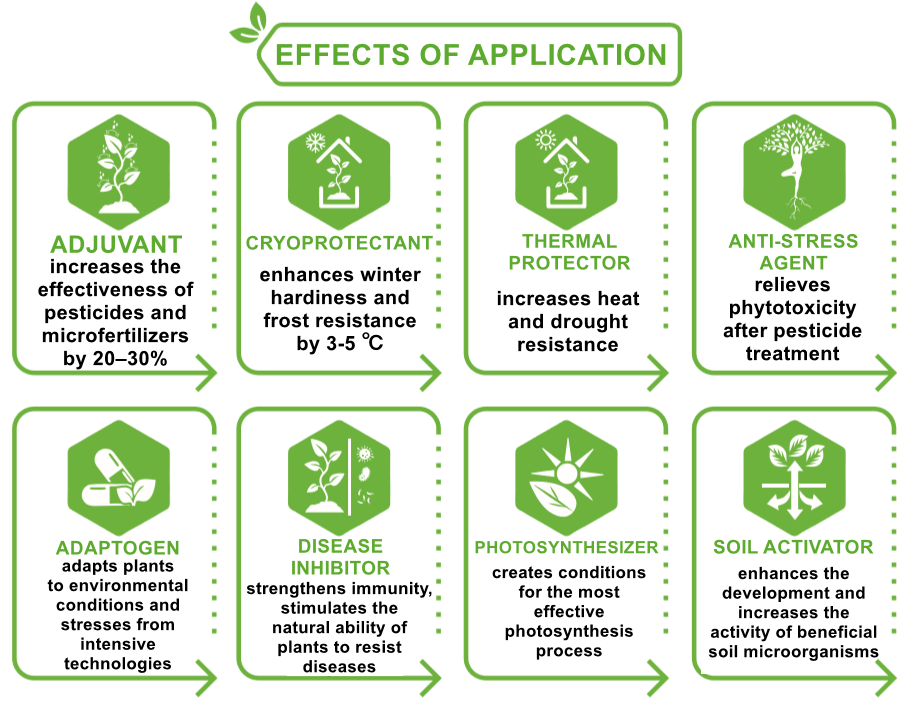
INCREASES YIELD BY 20–30% AND ABOVE
The active ingredients in VIMPEL 2® perform various functions and provide the opportunity to obtain the maximum effect from the use of the formulation and ensure its multifunctionality.
POLYHYDROGEN ALCOHOLS
During the freezing process, water can increase in volume by up to 10%, which can lead to rupture of cell walls and subsequently to the death of the entire plant. To avoid the negative impact of the environment on plants, it is necessary to use substances that increase the resistance of plants to frost. One of the best cryoprotectants are polyhydric alcohols, which prevent the development of damage to biological objects in the event of their freezing and subsequent thawing.
During the freezing process, two factors arise that cause damage to cells: the formation of intracellular ice and dehydration. When the structure of ice changes, it is possible to reduce the mechanical impact on the cytoplasm and cell membrane. Therefore, polyhydric alcohols have a protective effect by reducing the degree of cell dehydration, preventing the concentration of cell sap from increasing to a toxic level, and also decreasing the possibility of its crystallization.
The products of the transformation of polyhydric alcohols in cells are elementary carbohydrates (monosaccharides), which act as a building material and a source of energy. At the same time, they improve carbohydrate metabolism, which is manifested in an increase in the content of sugars in plants. And they are also a powerful source of synthesis of organic compounds during active growth and development of plants.
Polyhydric alcohols have hydrophilic properties, so when they get on the surface of leaves, they form a complex with free water, which is in a colloidal state, preventing the development of pathogenic organisms. In addition, protection against pathogens of bacterial diseases is carried out by strengthening immunity, stimulating the natural ability of plants to resist them. Due to increased immunity, the incidence of plant damage is reduced by 1.5-2 times, which allows the application of minimum recommended rates of fungicides.
With the help of polyhydric alcohols, VIMPEL 2® accelerates metabolic processes in plants, increases the amount of root secretions, which leads to increased activity of soil microorganisms in the root zone (rhizosphere). Polyhydric alcohols have a film-forming ability, so VIMPEL 2® ensures the fixation of tank preparations on the surface of leaves, which increases the effectiveness of biological preparations, pesticides and microfertilizers.
MODIFIED HUMIC ACIDS
Modified humic acids, presented in the product, were obtained as a result of experiments, during which about a dozen of our own unique variants of this active substance were developed. During the research, the company’s scientific experts came to the conclusion that the quantitative interval of the content of humic substances in the composition of agricultural products has a dose-effect.
That is, the effective use of the active substance is possible only under the condition of a specific composition. Deviation from the norm in any direction can lead to undesirable results. During the scientific and field researches, an optimal dose-effect curve was identified, which determines the change in the effect of modified humic acids on the plant depending on the concentration. The results of these studies became one of the concepts that formed the basis for the development of the VIMPEL 2® stimulant composition.
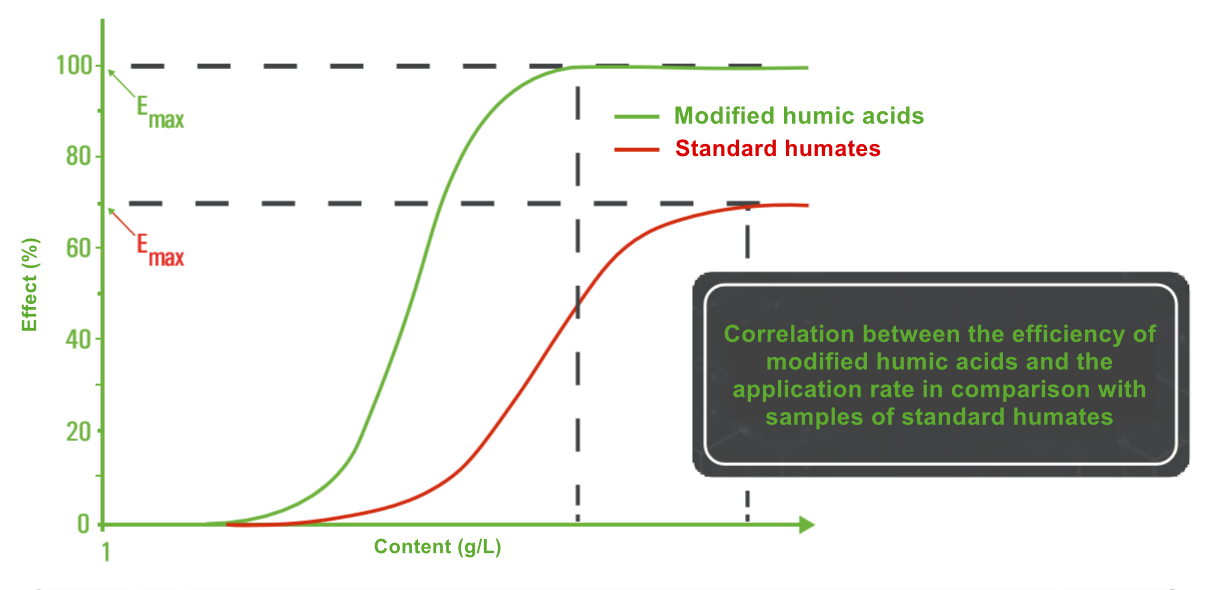
DURING THE MODIFICATION OF HUMIC ACIDS, THE COMPANY SCIENTISTS WERE GUIDED BY TWO CRITERIA:
1. The maximum level of penetration of modified humic acids, and as a result, maximum efficiency.
Concurrently, studies were also conducted to achieve the maximum degree of penetration of modified humic acids into plant cells and their main organelles – the nucleus, mitochondria, chloroplasts. Studies have shown that this indicator is influenced by both the molecular weight and the biological characteristics of plants. For this purpose, short-term microvegetation experiments were conducted. During the selection of experiment variants, the maximum saturation of plant cells with modified humic acids was determined under the conditions of different molecular weights.
THE LEVEL OF PLANT CELL ORGANELLES SATURATION WITH MODIFIED HUMIC ACIDS DEPENDING ON THEIR MOLECULAR WEIGHT
| Molecular weight of humic acids | Per 500 mg of fraction | Per 100 mg of fraction | |
| nucleus | mitochondria | chloroplasts | |
| 500±100 | 30,4±3,4 | 63.4±6.3 | 201.8±20.4 |
| 8400±600 | 61,0±6,1 | 97.4±9.7 | 274.0±27.4 |
| 12000±2500 | 36,5±3,7 | 72.6±7.3 | 160.0±16.0 |
From the above data, we can conclude that the modified humic acids, presented in the VIMPEL 2® growth stimulator, have the property of maintaining activity and water-soluble qualities in environments with different pH levels and effectively saturating plant cells, fully revealing their potential.
2. Activity and water solubility of humic acids in both acidic and alkaline environments.
As is known, the main properties of humic substances, such as effective activity, solubility and stability in solution, depend on the pH of the environment, which is associated with their structural and group composition. Humic substances are stably soluble in a neutral environment, but with a decrease in pH, this property changes depending on the chemical composition and origin of the substances. This can lead not only to a loss of efficiency of the tank mixture, but also to the failure of spraying equipment as a result of clogging of nozzles and other components of the units with insoluble particles of humates that have precipitated.
COMPARISON OF THE MASS FRACTION OF HUMIC SUBSTANCES IN SEDIMENT, % DEPENDING ON THE pH OF THE ENVIRONMENT
| рН | Humic substances sample No. 1 | Humic substances sample No. 2 | Modified humic acids (VIMPEL) |
| Mass fraction of humic substances in the sediment, % | |||
| 5.5 | – | – | – |
| 5.0 | 7.4 | – | – |
| 4.5 | 7.4 | – | – |
| 4.0 | 7.5 | 2.3 | – |
| 3.5 | 7.3 | 5.9 | – |
| 3.0 | 7.5 | 7.1 | – |
| 2.5 | 7.3 | 7.1 | – |
| 2.0 | 7.4 | 7.4 | – |
| 1.0 | 7.3 | 7.3 | – |
The main task in solving this issue was the selection of humic acids and the study of their behavior in solutions, in order to achieve their stability in tank mixtures. The relevance of this issue arose as a result agricultural producers using low-quality pesticides, which are rather cheap on the market. These products are characterized by one common feature: acidification of the working solution, at hte same time the water pH in many regions of our country does not correspond to neutral values. In an alkaline environment, phenolic and carboxyl groups deprotonate, which causes repulsion of negatively charged groups, and as a result, the molecules of humic substances have an elongated configuration. If the pH decreases, the functional groups protonate and the repulsion effects are minimized, eventually the molecules acquire a helical conformation.
At this stage, the hydrophobic areas are in the inner part of the structure, and the hydrophilic parts are in contact with the aqueous environment. This behavior is responsible for the micelle-like organization and reduction of surface tension of humic substances.
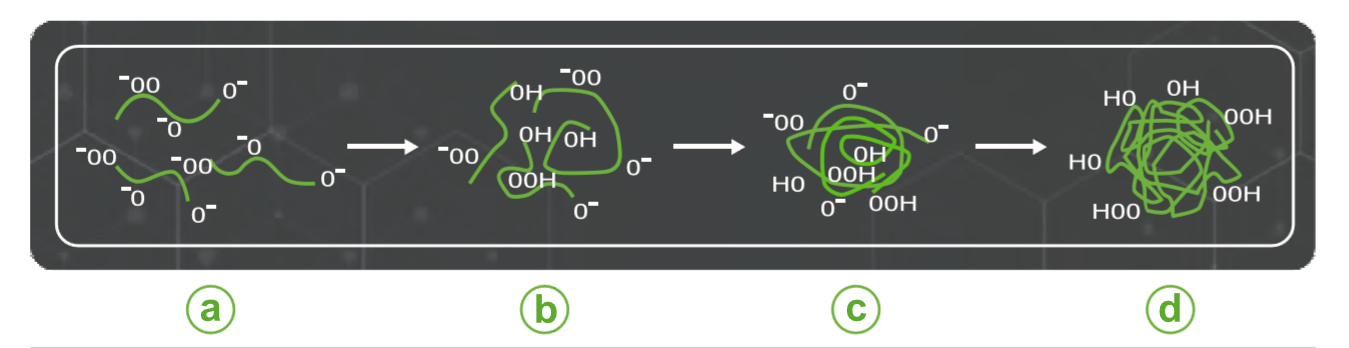
Behavior of humic substance molecules in an alkaline environment and the aggregation process as a result of a decrease in the pH of the medium:
a – repulsion of deprotonated groups, if pH>7; b – intramolecular aggregation in the event of decrease in the medium pH; c – intermolecular aggregation in the event of decrease in the pH; d – precipitation of humic substances, if pH=4.5.
An increase in the concentration of hydrogen ions causes protonation of carboxyl groups of humic substances, which ultimately leads to the precipitation of macromolecules. This process begins at pH=5.5, and should be considered as continuous, which contributes to the aggregation of humic substances at the molecular level, and, as a result, the formation of a hydrophobic surface. Therefore, we can conclude that an acidic environment deactivates humic acid molecules.
The solution to the problem of creating modified humic acids that will retain water-soluble properties and activity in acidic environments was found by the company’s specialists as a result of long-term research and modification of humic acids.
CARBONIC ACIDS
Natural stimulants-adaptogens based on carboxylic acids participate in the most important energy transformations of the plant organism, enhance the supply of oxygen to the tissues, increase the production of the main energy substance ATP-adenosine triphosphate. The regulatory effect of carboxylic acids is manifested even at very low concentrations (0.002% solution).
Carboxylic acids participate in metabolism, redox reactions, tissue respiration.
Due to their natural origin, carboxylic acids are subject to rapid metabolism in the plant and provide the formulation with a biostimulating effect. This leads to intensive activation of the growth of plant organs, and also accelerates the absorption of macro- and microelements from the soil.
Карбонові кислоти сприяють підвищенню вологоутримувальної здатності в тканинах рослин завдяки зниженню транспірації. Ці зміни роблять організм стійкішим до несприятливих факторів довкілля, рослини краще витримують високі та низькі температури.
Carboxylic acids contribute to an increase in the moisture-holding capacity of plant tissues by reducing transpiration. These changes make the organism more resistant to adverse environmental factors, plants better withstand high and low temperatures.
SYNERGY OF ACTIVE SUBSTANCES
Cultivated plants respond to pesticide treatment by synthesizing specific stress proteins and enzymes that neutralize the resulting negative effects. The complex of modified humic acids and polyhydric alcohols accelerates metabolic processes in plant tissues, which is manifested in a more intensive synthesis of anti-stress substances, activation of photosynthetic productivity of chloroplasts in cells, which in turn removes phytotoxicity after pesticide treatment.
In the presence of a polyhydric alcohols complex, humic acids increase their activity and level of permeability many times due to the high osmotic pressure of intracellular water caused by the action of alcohols. Carboxylic acids contribute to the growth of the number of microorganisms. As a result, CO2 release and cellulose destruction are activated, and a positive balance of humus accumulation is maintained. An increase in the microbial number of nitrogen fixers, phosphorus mobilizers, and other beneficial bacteria optimizes plant mineral nutrition and allows for a 20–30% reduction in the consumption of mineral fertilizers.